
The Fundamental Difference Between Peptides and Traditional Drugs
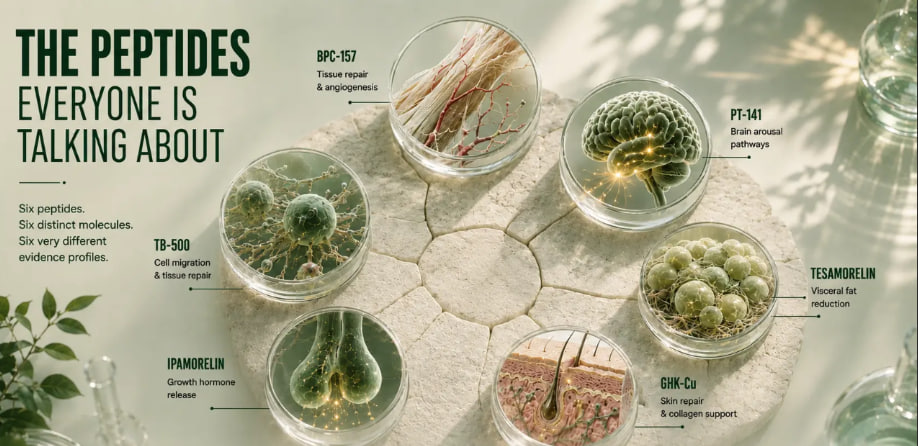
Traditional drugs are mostly small-molecule compounds with broad effects but limited precision. Peptides, made of amino acids, are naturally occurring signaling molecules in the human body that can mimic or modulate natural physiological processes. BPC-157, TB-500, PT-141, Ipamorelin, Tesamorelin, and GHK-Cu leverage this precision to offer targeted support for different needs.
Closer to the Body's Natural Mechanisms
The core advantage of peptides is precision. They interact with the body in ways that mimic or modulate naturally occurring physiological processes. For example, Ipamorelin stimulates the pituitary to release growth hormone naturally via GHS-R1a rather than introducing synthetic growth hormone directly. Tesamorelin, as a GHRH analog, supports the body's own endocrine pathways. This closeness to natural mechanisms is a key reason many customers choose peptides.
Targeted Benefits for Different Needs
BPC-157: Often called the "Wolverine Peptide," it supports natural repair of tendons, ligaments, muscles, and the gut. Preclinical studies suggest it supports angiogenesis, nitric oxide signaling, and growth factor activity.
TB-500: Derived from thymosin beta-4, it helps transport actin to injury sites, supporting soft tissue recovery and flexibility. It is often stacked with BPC-157.
Ipamorelin: A highly selective growth hormone secretagogue designed to avoid significant effects on cortisol, ACTH, prolactin, or appetite. It suits customers focused on anti-aging and body composition.
Tesamorelin: An FDA-approved GHRH analog marketed as Egrifta, backed by full Phase III data showing significant visceral fat reduction. In March 2025, the FDA also approved EGRIFTA WR, a once-weekly formulation.
PT-141: An FDA-approved cyclic heptapeptide that acts through melanocortin MC3R and MC4R receptors in the brain. It is approved for premenopausal HSDD and may help PDE-5 non-responders.
GHK-Cu: A naturally occurring copper-binding peptide. Multiple controlled human studies confirm it improves skin density, thickness, collagen synthesis, wrinkle depth, and elasticity.
Common Reasons Customers Choose Peptides
Precision: Peptides target specific physiological processes rather than affecting the whole body broadly.
Natural approach: Many peptides mimic the body's own signaling molecules, supporting natural functions.
Diverse options: Different peptides address recovery, growth hormone, fat loss, sexual health, and skin repair.
Positive user experience: Many customers report improvements in recovery speed, physical condition, skin quality, and quality of life.
Shared Limitations to Note
Most peptides require injection because oral use leads to rapid breakdown by digestive enzymes. Their short half-lives mean precise dosing strategies are necessary. Customers should choose based on individual needs and acceptable protocols.
Conclusion
BPC-157, TB-500, PT-141, Ipamorelin, Tesamorelin, and GHK-Cu offer alternatives to traditional drugs through their precision and closeness to natural mechanisms. Understanding their benefits and differences helps you find a more suitable option.